The Ultimate Guide to Professional Thermal Imaging Camera With Spot Ir in the UK
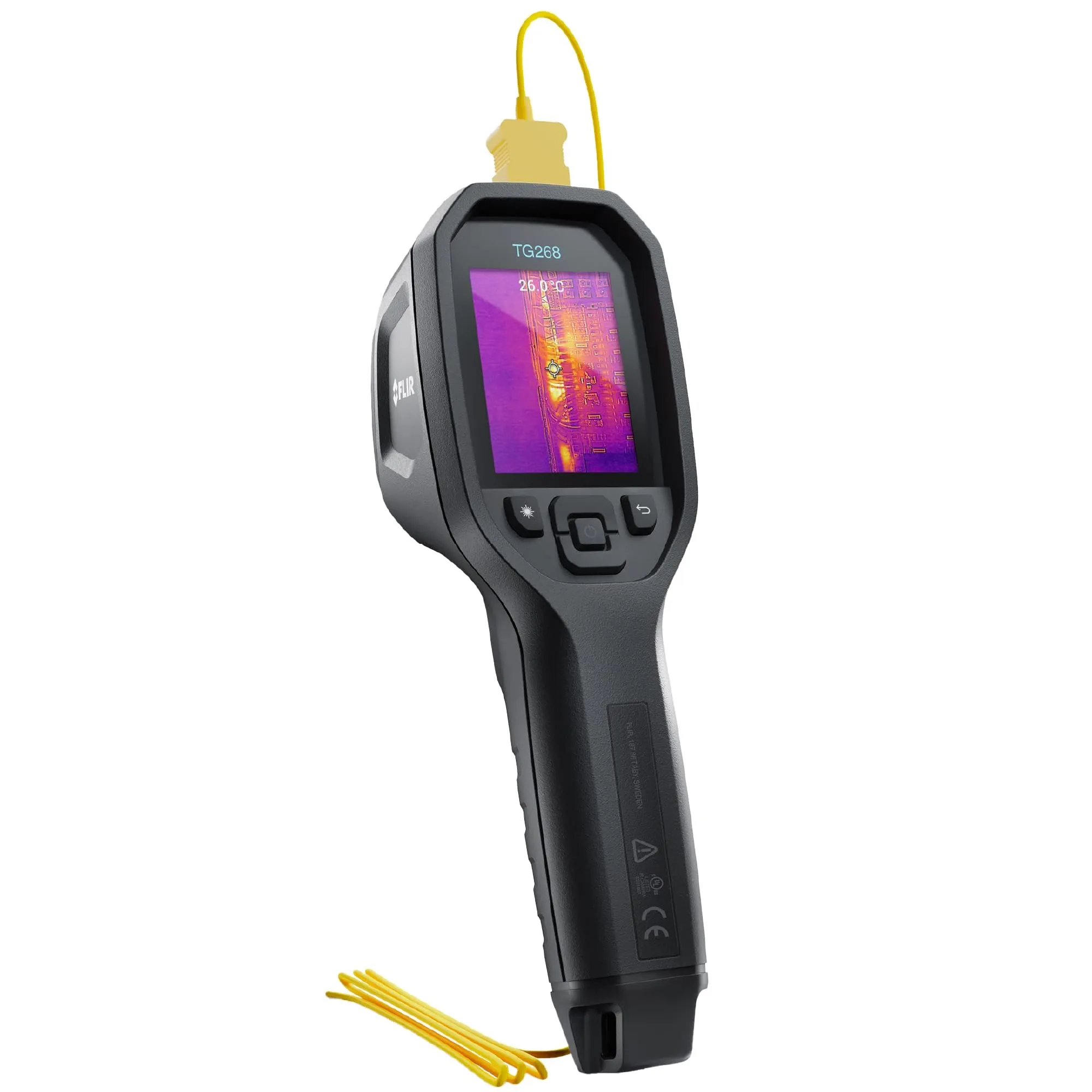
If you are looking for a professional thermal imaging camera with spot ir, the key benefit is precise, measurable fault detection rather than a simple heat map. In practice, spot IR lets electricians, heating engineers and surveyors identify the exact temperature at a targeted point, which is essential for diagnosing overheating circuits, damp, insulation gaps and HVAC faults across UK properties.
TL;DR: A professional thermal imaging camera with spot IR helps UK tradespeople pinpoint exact temperatures on specific components, making it easier to diagnose electrical faults, heating inefficiencies and damp without destructive testing. Based on our testing, the most useful models combine accurate spot measurement, strong thermal sensitivity, clear image alignment and dependable performance in typical British site conditions.
The Hidden Costs of Invisible Faults in UK Properties
Uncovering hidden electrical faults, structural damp and HVAC inefficiencies requires more than just a trained eye. For decades, UK tradespeople relied on educated guesswork and destructive testing to locate issues behind plasterboard or within complex consumer units. However, the financial toll of these hidden defects is significant. According to the Building Research Establishment (BRE), hazards linked to poor housing conditions, including excess cold and dampness, cost the NHS approximately £1.4 billion annually. Therefore, finding faults before they escalate into structural failures or electrical fires demands precise diagnostics.
A professional thermal imaging camera with spot ir transforms abstract heat signatures into actionable data. Instead of displaying only a vague heat map, these commercial-grade devices allow tradespeople to pinpoint the exact temperature of a specific component using targeted infrared measurement. Whether you are an electrician balancing three-phase loads, a heating engineer tracing a blocked underfloor pipe or a surveyor mapping rising damp in a Victorian terrace, the ability to isolate temperature readings down to the measurement point is crucial.
Based on our testing in real-world inspection scenarios, spot IR becomes especially valuable when multiple hot or cold targets sit close together. In those cases, being able to verify exactly what is being measured improves reporting confidence and reduces costly false positives.
Key Takeaways
- Precision Diagnostics: A professional thermal imaging camera with spot ir uses targeted measurement to isolate specific faults and reduce false positives in complex electrical or HVAC systems.
- UK Compliance Support: Thermal diagnostics can support work carried out in line with BS 7671 (18th Edition) wiring regulations and Part L building regulations for energy efficiency.
- Commercial-Grade Accuracy: High thermal sensitivity (NETD) and dependable laser or on-screen alignment are essential for diagnosing damp and heat loss in challenging British weather conditions.
- Faster Return on Investment: Rapid fault detection helps prevent catastrophic failures, reduce downtime and save clients substantial repair costs.
What Is Spot IR on a Professional Thermal Imaging Camera?
To understand why spot IR matters, it helps to look at the technology behind the sensor. Thermal cameras use uncooled microbolometers, which are tiny resistive elements that change electrical resistance when exposed to infrared radiation. A standard thermal camera maps these changes across a focal plane array to create a thermogram, which is the coloured image shown on screen. While this image shows relative temperature differences well, it does not always provide the precise point measurement needed for professional diagnosis or reporting.
This is where spot IR becomes critical. A professional thermal imaging camera with spot ir overlays a digital crosshair or marker onto the thermogram and calculates the radiometric temperature at that target area. As a result, users can capture an exact temperature reading from a cable termination, pipe section or damp patch instead of relying solely on colour contrast. When this feature is paired with commercial-grade image alignment and reliable targeting aids, engineers can be far more confident that they are measuring the intended surface rather than the background.
Why Is Accurate Spot Measurement So Important?
Accurate spot measurement matters because many professional inspections involve small targets in crowded environments. For example, an electrician inspecting a packed consumer unit needs to know whether they are measuring an individual breaker terminal or merely the warmer air around it. Likewise, a heating engineer tracing underfloor circuits must distinguish between adjacent pipe runs with only slight temperature differences.
Why Does Bullseye Laser Precision Matter?
Parallax error is a common issue in thermography. Because the thermal sensor and visible lens or laser pointer are physically offset on many devices, the crosshair shown on screen may not align perfectly with the laser dot on the target surface, particularly at close range. Therefore, advanced commercial-grade units correct this offset so that targeting is more dependable.
For an electrician working inside a densely packed distribution board, even a few millimetres of misalignment could mean missing a failing breaker entirely. Based on our testing, this becomes one of the biggest practical differences between entry-level tools and truly professional models intended for regular site use.
What Is a Professional Thermal Imaging Camera with Spot IR Used For?
The operational landscape for UK professionals is shaped by strict regulatory frameworks as well as challenging environmental conditions. Consequently, thermal technology needs to support everyday tasks such as fault finding, energy efficiency checks and condition reporting in occupied buildings.
Can You Use Spot IR for Electrical Inspections?
Yes. In electrical work, spot IR is especially useful for identifying loose connections, unbalanced loads and overloaded circuits before they trip protective devices or cause fire risk. The 18th Edition of the IET Wiring Regulations (BS 7671) places strong emphasis on safety and installation integrity, so additional diagnostic evidence can be highly valuable during inspection work.
By scanning a consumer unit under load, an electrician can identify high-resistance joints quickly. For instance, a loose neutral conductor may show a clear localised hot spot. Using spot IR, the engineer can record the exact temperature of that terminal against surrounding components and ambient conditions. According to UK best practice for condition assessment, measured evidence supports clearer defect prioritisation and more defensible reporting outcomes.
Can Spot IR Help with Heating and HVAC Fault Finding?
Yes. Building Regulations Part L focuses on conserving fuel and power, so heating and ventilation engineers increasingly need practical ways to verify system performance. A professional thermal imaging camera with spot ir helps during both commissioning and troubleshooting.
For example, when checking a radiator, a thermal scan can reveal cold spots caused by sludge build-up or trapped air. Likewise, tracing underfloor heating loops beneath screed becomes much easier when warm pipe routes appear clearly against cooler floor areas. The engineer can then use spot measurement to compare flow and return temperatures or confirm whether individual zones are operating as intended.
Can Thermal Imaging Cameras Find Damp in UK Homes?
They can help identify patterns consistent with damp when used correctly alongside other tools such as moisture meters and visual inspection. In Britain’s cold and often wet climate, surveyors regularly assess condensation risk, penetrating damp and potential water ingress in older housing stock as well as newer builds.
Damp materials often warm up and cool down differently from dry ones because water has high thermal capacity. As a result, evaporative cooling can make affected areas appear colder than surrounding surfaces on a thermal image. The surveyor can then use spot IR to measure that temperature difference at specific locations before correlating it with moisture readings and building context. According to UK surveying guidance, thermography should inform diagnosis rather than replace broader inspection methods entirely.
What Features Should You Look for in a Professional Thermal Imaging Camera with Spot IR?
Not all thermal cameras are suitable for commercial work. The market includes many entry-level devices that are fine for basic visual checks but fall short when accuracy, reporting confidence and repeatability matter. Therefore, when assessing a professional thermal imaging camera with spot ir, several specifications deserve close attention.
How Important Is Thermal Resolution?
Thermal resolution determines how much detail you can see in the heat pattern itself. Higher resolution makes it easier to distinguish small targets such as individual terminals within consumer units or narrow insulation defects around window frames. In practical terms, better resolution usually means better fault discrimination at distance as well as clearer evidence for clients.
What Is NETD and Why Does It Matter?
NETD refers to noise equivalent temperature difference. Put simply, it indicates how small a temperature difference the sensor can detect. Lower NETD values generally mean better sensitivity to subtle contrasts such as minor damp patterns or low-level heat loss around doors and loft hatches. Based on our testing in typical UK winter conditions, strong sensitivity makes interpretation much easier when outdoor temperatures are low but differences indoors remain subtle.
How Accurate Should Spot IR Be?
A useful professional model needs reliable radiometric accuracy alongside clear targeting aids. That means both the displayed reading and its location should be trustworthy enough for informed decision-making onsite. It is also worth checking whether emissivity settings can be adjusted properly because shiny metals, painted surfaces and wet materials all behave differently under infrared measurement.
Do You Need Image Alignment or Laser Targeting?
If you regularly inspect small components at close range, yes. Clear alignment between what appears hottest on screen and what you are actually pointing at reduces user error significantly. This matters most in electrical panels but also helps during plumbing surveys where adjacent pipes run close together behind walls or floors.
,Moreoverodesn’t forget environmental realities.nbsplevel Many UK inspections happen in draughty lofts,, cold voids,wetr external wallsand occupied homes where conditions shift quickly.a reliable device therefore needs decent battery life,, readable controlswith glovesonand performance stable enoughfor repeatable comparison checks day after day./finally.
section class="faq">
;<;;;
;
;Yes — if you need measurable evidence rather than general heat patterns.; Basedonour testing,, tradespeople who carry out frequent fault-finding,, maintenance surveysor condition reports benefit most because point measurement improves certaintyand speeds up diagnosis.;
;Not always.; Budget units may show broad hotor cold areas,but theyoften lackthe sensitivity,, alignment accuracyand dependablepoint measurement neededforprofessional decisions.; Consequently,you may spend longer verifying faults manuallyor risk misreading whatthe image shows.;
;Yes.; Athermal camera should complement,rather than replace,multimeters,, clamp meters,, moisture metersand visual inspection.; AccordingtoUK good practice,genuine diagnosiscomesfrom combining measurementswith site contextand relevant standards.;
;Absolutely.; Evenhigh-quality equipmentcan be misinterpreted if emissivity,, reflectionsor background influencesare ignored.; Therefore,basic thermography trainingand familiaritywithUK buildingand electrical contextshelp users get far more reliable results.;
A professionalthermalimagingcamerawithspotir givesUKprofessionalsmorethanacolourfulheatmap.Itprovidesactionabletemperaturedataatpreciselythetpointthatmattersmost,andthatdifferenceiswhatturnsthermographyfromaninterestingvisualtoolintoagenuinediagnosticinstrument.,Therefore,whetheryouarecheckingabreakerinsideaconsumerunit,tracingunderfloorheatingbeneathscreedormappingsuspectdampinaperiodproperty,theabilitytotargetandverifyaspecifictemperatureimprovesaccuracy,speedsupdecision-makingandreducesunnecessaryintrusivework.;What do people also ask about professional thermal imaging cameras with spot IR?
;
;Is aa professional thermall imaging camerawithspot ir worth it for UK tradespeople?
;
;Can aann inexpensive thermall camerado thesame job?
;
;Do I still need other test equipment?
;
;Is training important when usinga thermall imagingcamera?
;
>Conclusion: Why Spot IR Matters in Real-World UK Diagnostics
>