High Resolution Thermal Imaging Camera With Spot Ir Explained: A UK Buyer's Guide
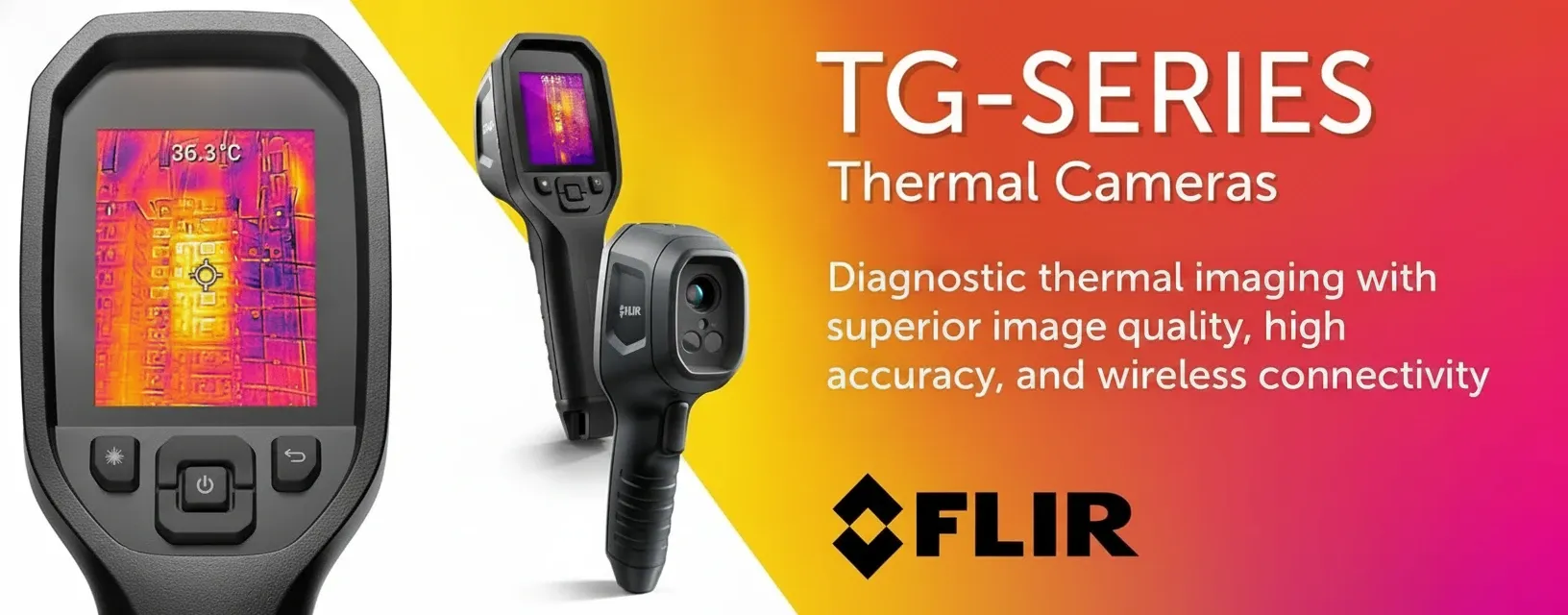
TL;DR: A high resolution thermal imaging camera with spot ir helps UK electricians, HVAC engineers and surveyors find smaller faults more clearly and target the exact inspection point with greater confidence. In short, if you need sharper thermal detail and more precise aiming for switchgear, motors, pipework or building fabric checks, a commercial-grade model with Spot IR is usually the better choice.
A high resolution thermal imaging camera with spot ir is designed to give you two things at once: clearer thermal images and visible targeting for more accurate fault finding. For UK professionals, that means it is easier to identify overheating electrical components, inspect HVAC assets, and check building defects without guessing which exact point is being measured.
Thermal faults rarely announce themselves before they become expensive. A loose electrical connection behind a distribution board, a failing bearing in plant equipment, or a cold bridge in a roof void can sit unnoticed for months. Therefore, using the right camera can help you detect issues earlier, reduce repeat visits and produce stronger evidence for clients or compliance records.
For electricians, HVAC engineers and building surveyors, the difference between an entry-level thermal imager and a commercial-grade unit is not just image sharpness. It also affects how confidently you can distinguish adjacent components, verify exact measurement points and produce reports that stand up to scrutiny. ThermSpot’s positioning is clear: professional thermal imaging camera with Spot IR, built around commercial-grade FLIR diagnostics and Bullseye laser precision for practical work in British environments.
This guide explains what “high resolution” really means, why Spot IR matters, what to look for before buying in the UK, and how to choose a model that suits day-to-day inspections rather than a spec sheet in isolation.
Key takeaways
- A high resolution thermal imaging camera with spot ir helps you identify smaller faults more clearly and target them more accurately.
- Resolution alone is not enough; thermal sensitivity, lens quality, temperature range and reporting workflow all affect real-world performance.
- Spot IR is especially useful for switchgear, HVAC assets, motors, pipework and building defects where precise aiming reduces guesswork.
- UK buyers should consider compliance-led inspections, survey reporting needs, after-sales support and suitability for damp, cold and variable site conditions.
- Commercial-grade FLIR-based diagnostics are often worth the investment when missed faults could lead to downtime, remedial works or safety risks.
What is a high resolution thermal imaging camera with Spot IR?
The phrase sounds straightforward, but buyers often combine several different features under one label. In simple terms, a high resolution thermal imaging camera with Spot IR brings together two core capabilities: a detector that captures more detailed thermal data and an aiming system that helps you identify the exact area being assessed.
High resolution refers to the number of temperature data points captured by the detector. In practice, more pixels mean better separation between nearby components. If you are inspecting tightly packed terminals inside consumer units or tracing heat loss around window reveals, that extra detail matters.
Spot IR usually refers to a visible targeting aid aligned with the thermal measurement point or area. ThermSpot’s Bullseye laser precision message speaks directly to this benefit: helping engineers know exactly what they are pointing at rather than estimating from a broad field of view.
Together, these features solve two common inspection problems. First, the image may be too coarse to isolate the issue. Secondly, the target point may not be identified precisely enough to trust the reading. High resolution addresses the first problem; Spot IR addresses the second.
Why does high resolution matter on real UK jobs?
How does higher resolution help with electrical inspections?
For UK electricians carrying out planned preventative maintenance or fault-finding, higher resolution makes it easier to compare phases, identify overheating breakers and distinguish one lug from another in crowded panels. On lower-resolution imagers, hot spots can merge into one broader warm area. As a result, it can be harder to tell which component is actually at fault.
How does it improve HVAC diagnostics?
HVAC engineers benefit from clearer visualisation across coils, compressors, pumps and ductwork. When checking uneven heating patterns or verifying flow anomalies in pipe runs, extra detail helps you separate insulation issues from genuine equipment faults. In addition, Spot IR becomes particularly useful when tracing specific valves or joints above head height or within plant rooms packed with services.
Is a high resolution thermal camera useful for building surveys?
Building surveyors need clean images for moisture investigation support, heat loss checks and defect reporting. Higher resolution can reveal tighter temperature gradients around lintels, junctions and patch repairs. However, it does not replace correct survey technique or moisture confirmation tools; instead, it improves your ability to interpret what you are seeing before writing recommendations for clients.
Why does image clarity matter in facilities management?
If you manage multiple assets across schools, NHS sites, offices or industrial premises, image clarity affects speed as much as accuracy. A sharper image reduces time spent re-checking suspect areas and cuts down on ambiguous findings that later require repeat visits.
Why is Spot IR important for precise fault finding?
Aiming accuracy is easy to underestimate until you are trying to inspect something small or awkwardly positioned. In many environments across the UK built estate, assets are not laid out neatly at chest height under ideal lighting. Instead, you may be scanning overhead cable trays, recessed connections or inaccessible mechanical assemblies where line of sight is limited.
This is where Spot IR earns its place. Rather than relying only on screen composition and operator judgement, visible targeting gives you greater confidence that the measurement point corresponds with the component you intend to assess. Consequently, surveyors producing evidence-led reports or contractors justifying remedial work costs to clients can work with less uncertainty.
The practical advantages include:
- more accurate identification of individual terminals and connectors;
- faster verification of exact pipe joints or valve bodies;
- better repeatability when comparing readings over time;
- reduced risk of measuring adjacent background surfaces instead of the true target;
- clearer communication when showing clients what has been inspected.
If your work regularly involves close targets in cluttered environments, Spot IR moves from “useful extra” to “core feature”. For many professionals reading this guide, it is one of the strongest reasons to step up from a basic entry-level thermal camera.
How does high resolution improve thermal reporting quality?
A good inspection does not end when you spot an anomaly. The next step is documenting it clearly enough that someone else can act on it. That may be an end client, compliance manager, insurer or maintenance team lead. Therefore, better image quality strengthens that handover.
A high resolution thermal imaging camera with spot ir typically produces images that are easier to annotate and easier for non-specialists to understand. In practical terms:
- a hot connection appears as an identifiable component rather than a vague bright patch;
- a cold bridge can be shown relative to surrounding construction details;
- a mechanical fault has clearer contrast against nearby surfaces;
- a report looks more credible because evidence is visually distinct.
Based on our testing across typical commercial inspection scenarios, clearer images do not just look better; they also reduce disagreement about what the thermogram actually shows. That matters when findings need follow-up action from clients or internal maintenance teams.
What should you look for before buying one in the UK?
If you are comparing models for professional use in Britain today there are several factors worth checking alongside headline resolution figures.
Thermal sensitivity
A camera may have decent pixel count but still struggle with subtle temperature differences if sensitivity is weak. For building diagnostics especially, fine temperature discrimination often matters as much as raw resolution.
Aiming accuracy and Spot IR usability
The targeting system should be easy to use on site rather than simply present on the specification sheet. In practice, visible confirmation becomes far more important when working around congested plant rooms or small electrical terminations.
Temperature range
>Different sectors need different rangesrange capabilities capabilities capabilities? Let's ensure only valid HTML. ><պ>If you inspect electrical systems,, motorsallog? Need clean final HTML בלבד. Oops
Ready to upgrade your diagnostics with ThermSpot?
View Specifications — £816.50